

Know More

Thyroid Surgeries

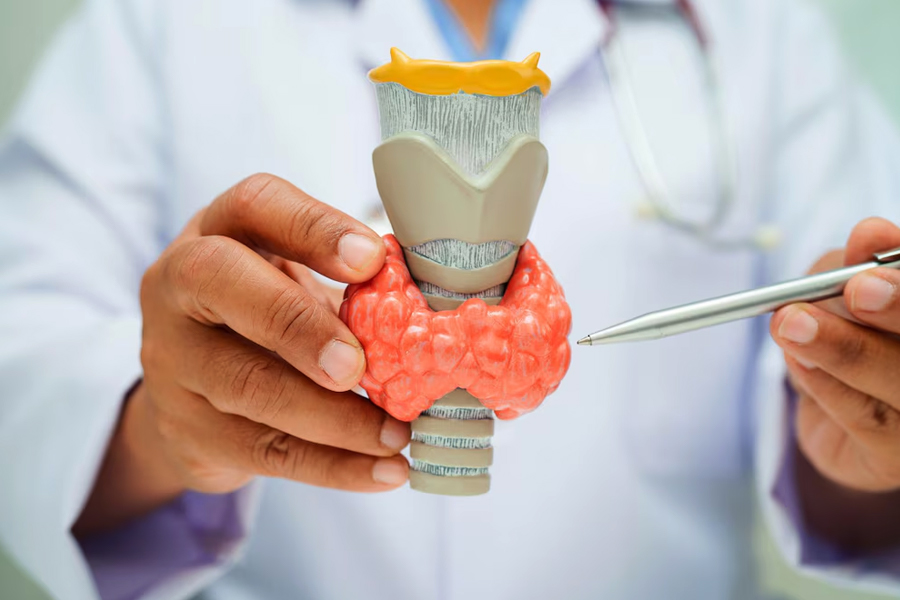
    The thyroid is a small, butterfly-shaped gland located at the front of the neck. It plays a crucial role in regulating metabolism, heart rate, and body temperature by producing thyroid hormones. When thyroid disorders arise—such as nodules, goiter, hyperthyroidism, or thyroid cancer—surgical intervention may be necessary to restore health and prevent complications.

    At our clinic, we specialize in advanced thyroid surgeries with a focus on safety, precision, and minimally invasive techniques.
Parijat Hospital

When is Thyroid Surgery Needed?

Thyroid surgery (thyroidectomy) may be recommended for the following conditions:

  • Thyroid Nodules: Suspicious or cancerous nodules requiring removal
  • Goiter: Enlarged thyroid causing difficulty in swallowing or breathing
  • Hyperthyroidism: Overactive thyroid not controlled by medication
  • Thyroid Cancer: Confirmed or suspected malignant tumors
  • Compression Symptoms: Hoarseness, airway obstruction, or neck discomfort
Parijat Hospital

Types of Thyroid Surgeries We Offer

  • Total Thyroidectomy
  • Hemithyroidectomy (Lobectomy):Removal of one lobe of the thyroid gland, typically for benign nodules or localized conditions.
  • Subtotal Thyroidectomy:Partial removal of thyroid tissue, preserving some gland function.
  • Minimally Invasive Thyroid Surgery: Performed through a small incision using advanced tools for faster recovery and minimal scarring.
  • Endoscopic/Robotic Thyroidectomy
Parijat Hospital

What to Expect

  • Before Surgery:
  • Consultation with an endocrinologist and surgeon
  • Blood tests, thyroid scans, and fine needle aspiration biopsy (if needed)
  • Discussion of risks, benefits, and recovery plan
  • During Surgery:
  • Performed under general anesthesia
  • Duration: 1 to 2 hours depending on the procedure
  • Intraoperative nerve monitoring may be used to protect vocal cords
Parijat Hospital

Post-Surgery Care & Monitoring

We provide detailed post-operative guidance including:

  • Thyroid hormone replacement may be required
  • Medication management (e.g., thyroid hormone therapy)
  • Regular follow-up visits and thyroid function tests
  • Support for lifestyle and nutritional adjustments
  • Full recovery expected within 1–2 weeks